The menú del día, and the long lunch that runs the coast
By Penrose Bay EditorialPublished October 21, 20266 min read
Walk down almost any high street on the coast at a quarter to two and you will notice the same small ritual. A chalkboard appears on the pavement, a waiter in a white shirt wipes down the terrace tables, and people who were at their desks a moment ago begin to drift in from every direction.
This is the menú del día, the set-price weekday lunch that has quietly organised Spanish working life for generations. It is not a tourist offer or a trend. It is the plain, generous middle of the day, and on the Costa del Sol and the Costa Blanca it is one of the easiest ways to understand where you are.
If you are thinking of buying here, or you already own a home and want to settle in properly, this is a habit worth learning early.
What the menú del día actually is
The formula is simple. For one fixed price you are offered a choice of first courses, a choice of second courses, bread, a drink, and then either a dessert or a coffee. The drink is usually a glass of wine, a beer or a bottle of water, and the whole thing is built to be eaten without fuss.
It is a weekday institution, so many places serve it only from Monday to Friday and stop when the weekend arrives. Some stretch it to Saturdays, and a good number put a slightly grander version on the board for Sundays. The kitchen is cooking for people who live nearby, which is why the food tends to be honest rather than showy.
The price is the other thing you will notice. It is modest by the standards of most of northern Europe, and it stays modest because the restaurant is counting on you coming back on Thursday.
Reading the board
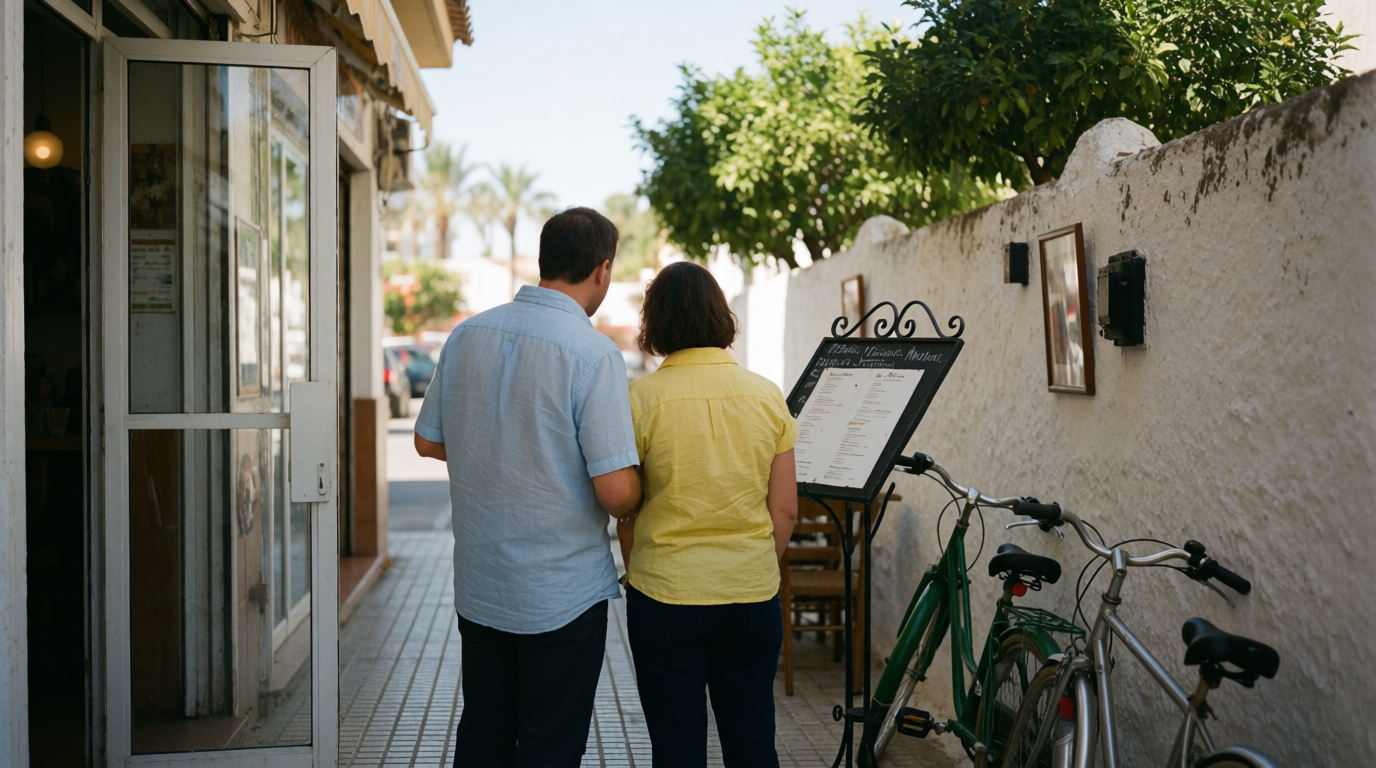
The chalkboard is written in Spanish, and that is part of the pleasure. Primeros are first courses, often a salad, a soup, lentils or a plate of something fried. Segundos are the mains: grilled fish, a stew, chicken with garlic, meatballs in sauce, a piece of pork with chips. Postres are the finish, and flan, rice pudding or a piece of fruit are the usual suspects.
A few habits help. Ask what the dish of the day is, because the best value is often the thing the kitchen made that morning. Do not be alarmed if the waiter reels off the options at speed, since a nod and a repeat of the dish you heard is perfectly acceptable. And do not expect a menu in six languages. A place that has one chalkboard and a full room at two o'clock is telling you something good.
On the Costa del Sol you will often see ensaladilla rusa, a cool potato and tuna salad that is taken very seriously, along with fried fish from the Málaga fritura tradition. Gazpachuelo, the warm fish and potato soup finished with a little mayonnaise, is a Málaga speciality worth ordering when you see it. Further along the coast, anywhere an espeto is turned over embers is also likely to be serving a sensible lunch menu alongside it.
Two coasts, two tables
The Costa Blanca leans towards rice. In the towns of Alicante province, from Calpe and Altea to Moraira and Benissa, a midday menu will very often include an arroz, whether a dry, golden rice with seafood, a caldoso that is closer to a soup, or an arroz a banda cooked in a fish stock and served with alioli. Rice is traditionally a lunchtime dish here, cooked to order and eaten without hurry, which is a reminder that the best things on the coast cannot be rushed.
The Costa del Sol is more of a frying and grilling coast. Anchovies, small squid, grilled sardines in season and a good tomato salad with olive oil are the backbone of the table. Inland, in the villages above the coast, the menu shifts again towards stews, cured ham and dishes made for cooler days.
Neither coast is trying to be fashionable at lunchtime. Both are trying to feed you well and send you back into the afternoon in a good mood.
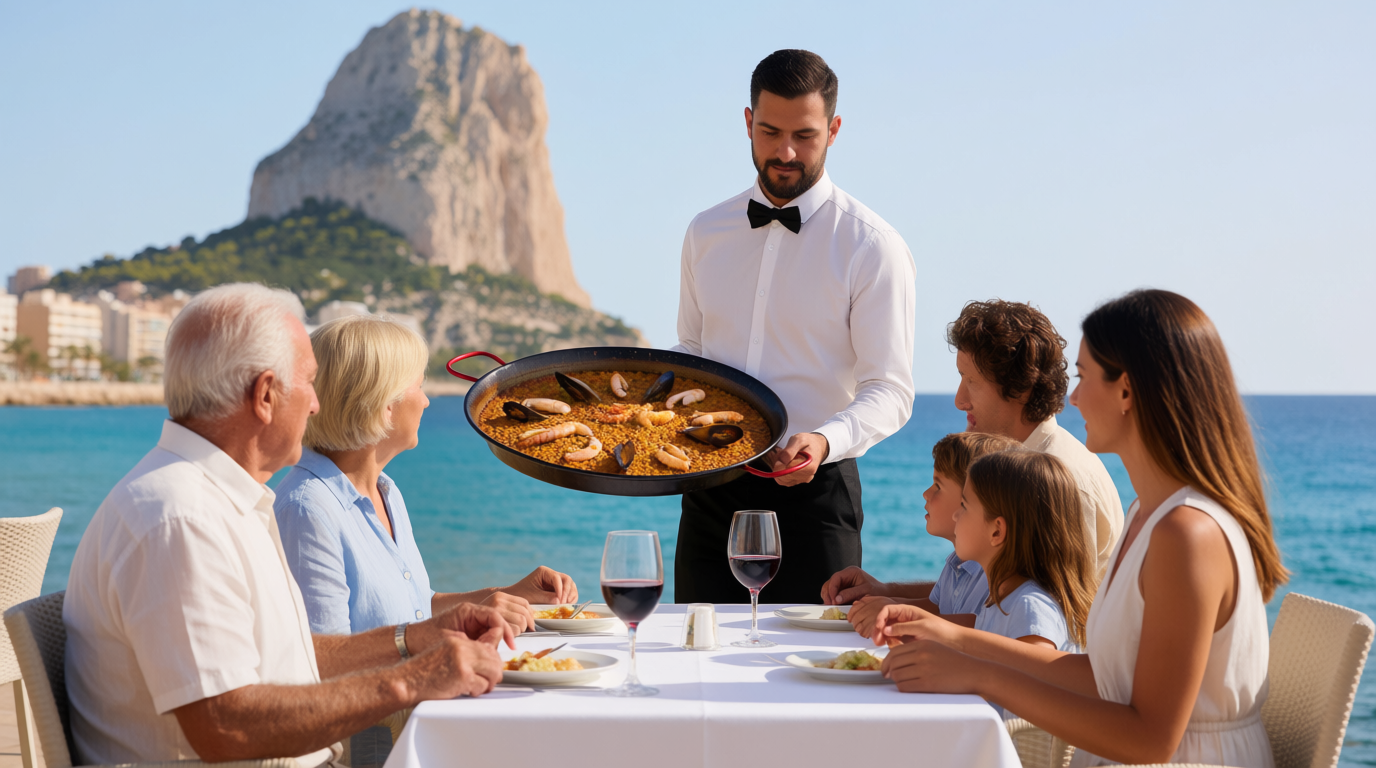
The menú del día is less a meal than an agreement: that the middle of the day deserves a proper table.
The sobremesa is the point
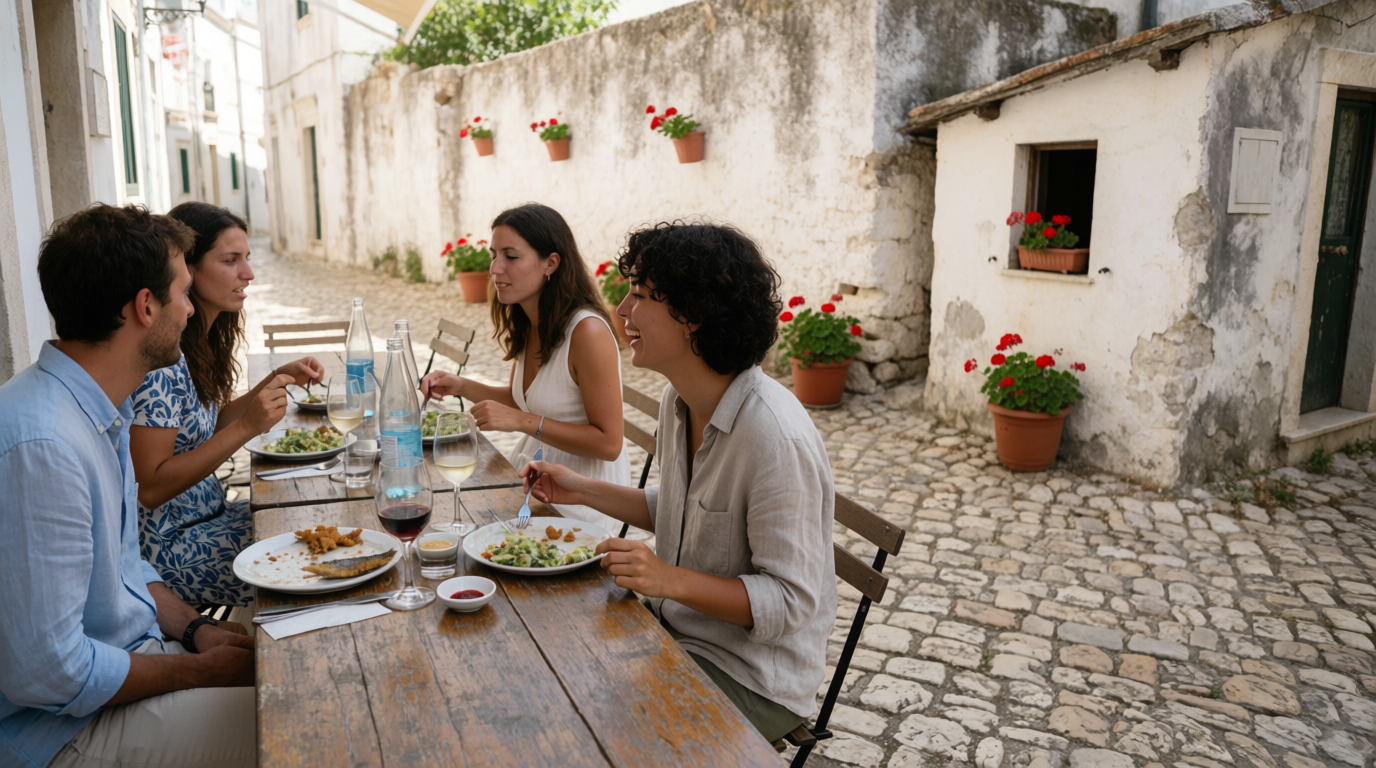
The real secret of the long lunch is what happens after the plates are cleared. The Spanish word is sobremesa, and it means, roughly, the time spent over the table once the eating is done. Coffee arrives, then perhaps a small glass of something, and the conversation carries on with no one checking the time.
This is why the shutters come halfway down in the early afternoon in so many towns, and why a plaza at four o'clock can feel like a different place from the same plaza at noon. It is not laziness. It is a rhythm in which the day has two halves, and the evening starts later because the afternoon began later.
If you are used to a quick sandwich at a desk, the first few weeks can feel slow. After that, most people find it hard to go back.
What it teaches you as an owner
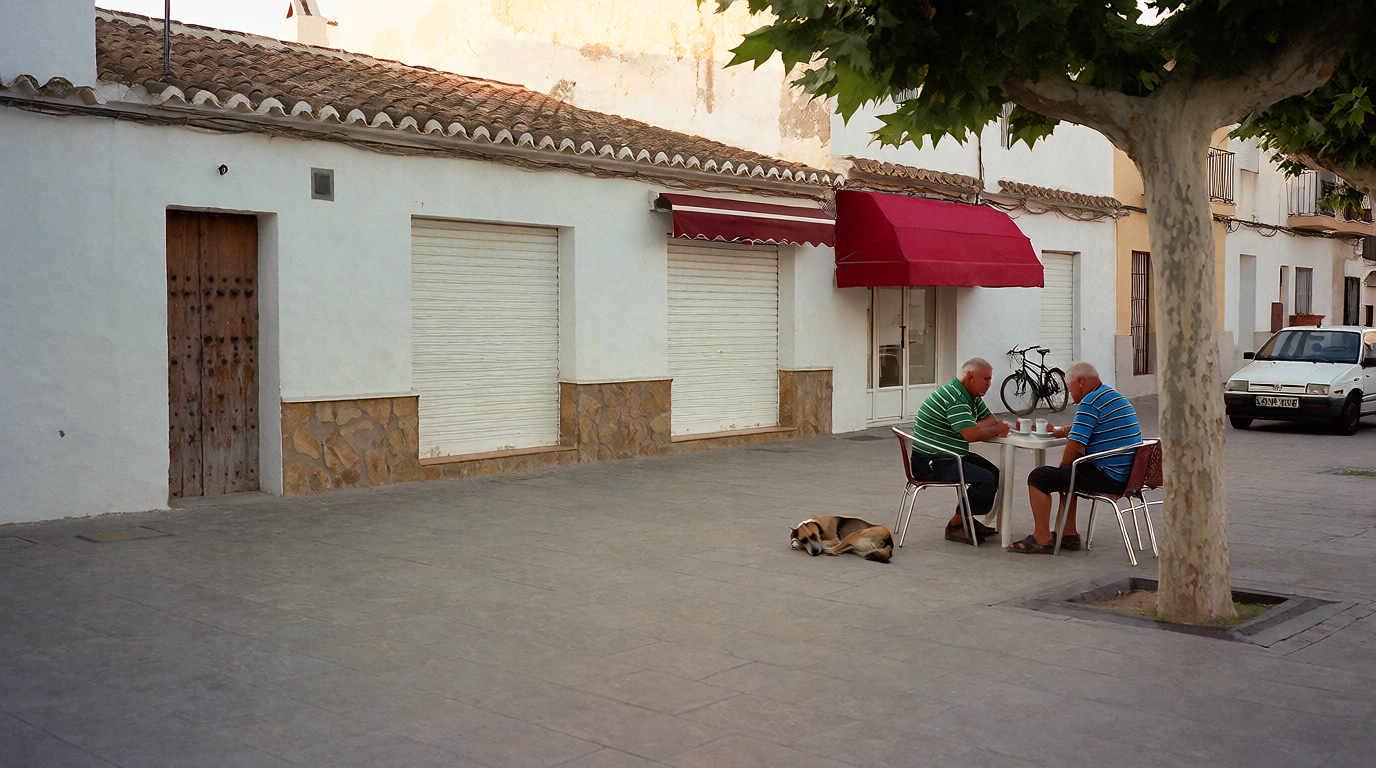
Learning to eat lunch the local way is a small lesson in how to live somewhere rather than visit it. Errands, appointments and shop visits fit around the middle of the day, and it helps to know that a counter that is closed at two is simply at lunch, not out of business. You begin to plan your mornings for the things that must be done and your afternoons for the things worth lingering over.
It also changes how you meet a place. A regular table, a waiter who remembers that you take your coffee with a splash of milk, a neighbour who nods across the room: these are the beginnings of belonging, and they tend to start with a chalkboard on a pavement.
A few simple ways to start:
- Choose a place with a full room of locals, not a quiet one with a photo menu.
- Arrive a little after two, when the kitchen is in full swing.
- Order the dish of the day, and say yes to the coffee.
- Stay for the sobremesa, even if it feels long the first time.
If you would like to talk it through
We are here to help you picture the life, not just the property. If you are weighing up a town on the Costa del Sol or the Costa Blanca and want to understand what an ordinary Tuesday there feels like, get in touch. We will point you to the streets worth walking, the tables worth sitting at, and, when you are ready, the vetted local experts who can take the next step with you.
The introduction
The local expert who knows this coast
We are not the estate agency. We are the introduction. When a piece like this turns into a plan, we connect you with a vetted local expert who knows the town and speaks your language.
Find your local expert