August on the coast, when Spain arrives for the summer
By Penrose Bay EditorialPublished October 17, 20265 min read
Most people picture August on the Spanish coast as a month for visitors from abroad. It is that, but it is also the month Spain itself goes on holiday, and the difference changes everything about how a town sounds, eats and sleeps.
Families who live in Madrid, Seville or Valencia (and plenty who live much closer) return to the flat their grandparents bought decades ago, or the house the whole family shares. The coast turns louder, later and a good deal more Spanish.
If you are thinking of buying here, or you already own and want to live well, August is worth understanding properly. It is not the whole story of coastal life, but it is the month that explains a great deal of it.
The month the coast changes language
The Spanish word for the summer holiday habit is veraneo, and it has a particular meaning. It is not a week away. It is a settled stretch in the same place, with the same neighbours, the same bakery and the same table at the same bar, year after year.
You notice it first in the plazas. Children are still playing football at eleven at night while their grandparents sit on benches in a loose circle, commenting on everything. In the towns of the Costa del Sol and the Costa Blanca, the streets that feel calm in February now feel like one long family gathering.
It is a sociable, generous kind of noise. It is also a good moment to see which parts of a town belong to its residents and which belong only to the season.
A day that starts late and ends later
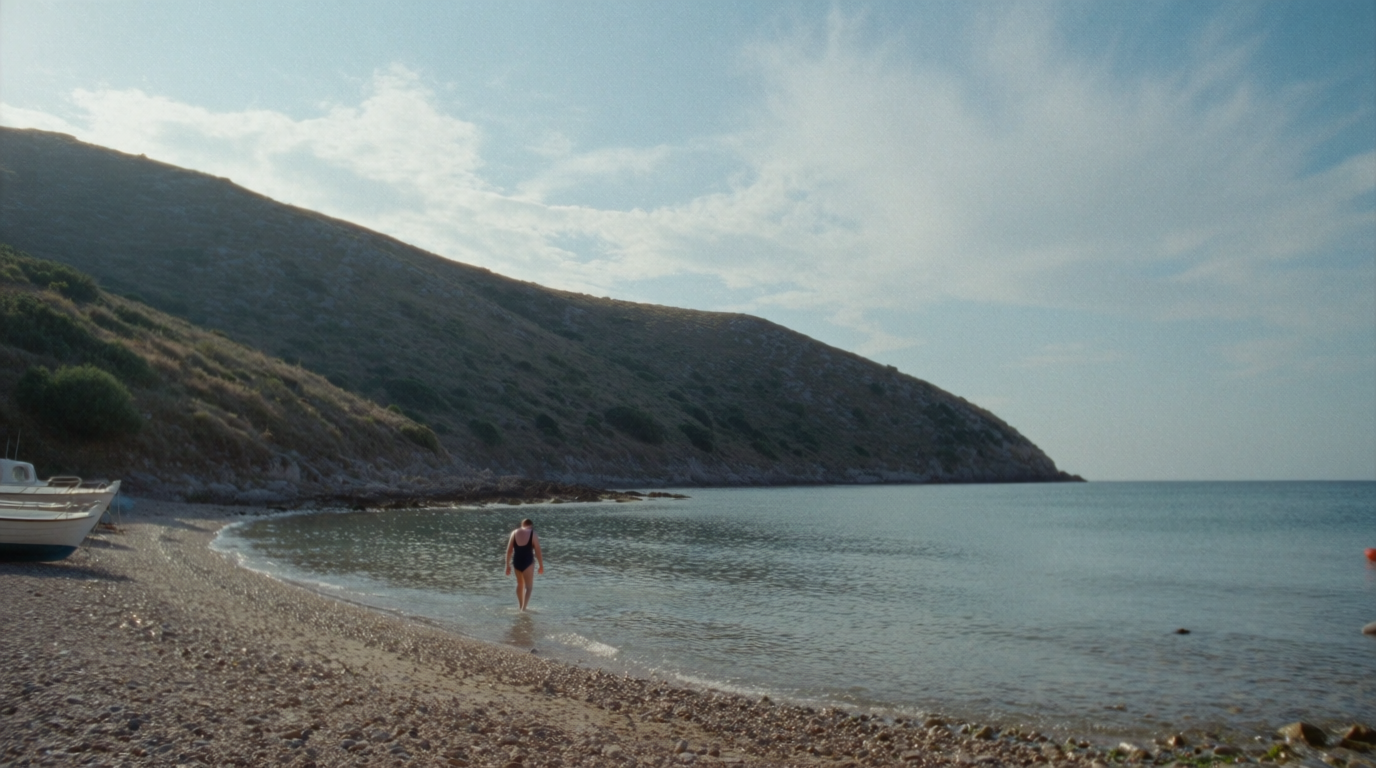
The August day has its own shape. The beach is quiet early, when a few swimmers and walkers have the water almost to themselves. It fills towards late morning, thins as families head home for lunch, and then fills again as the afternoon softens and the sea cools the evening air.
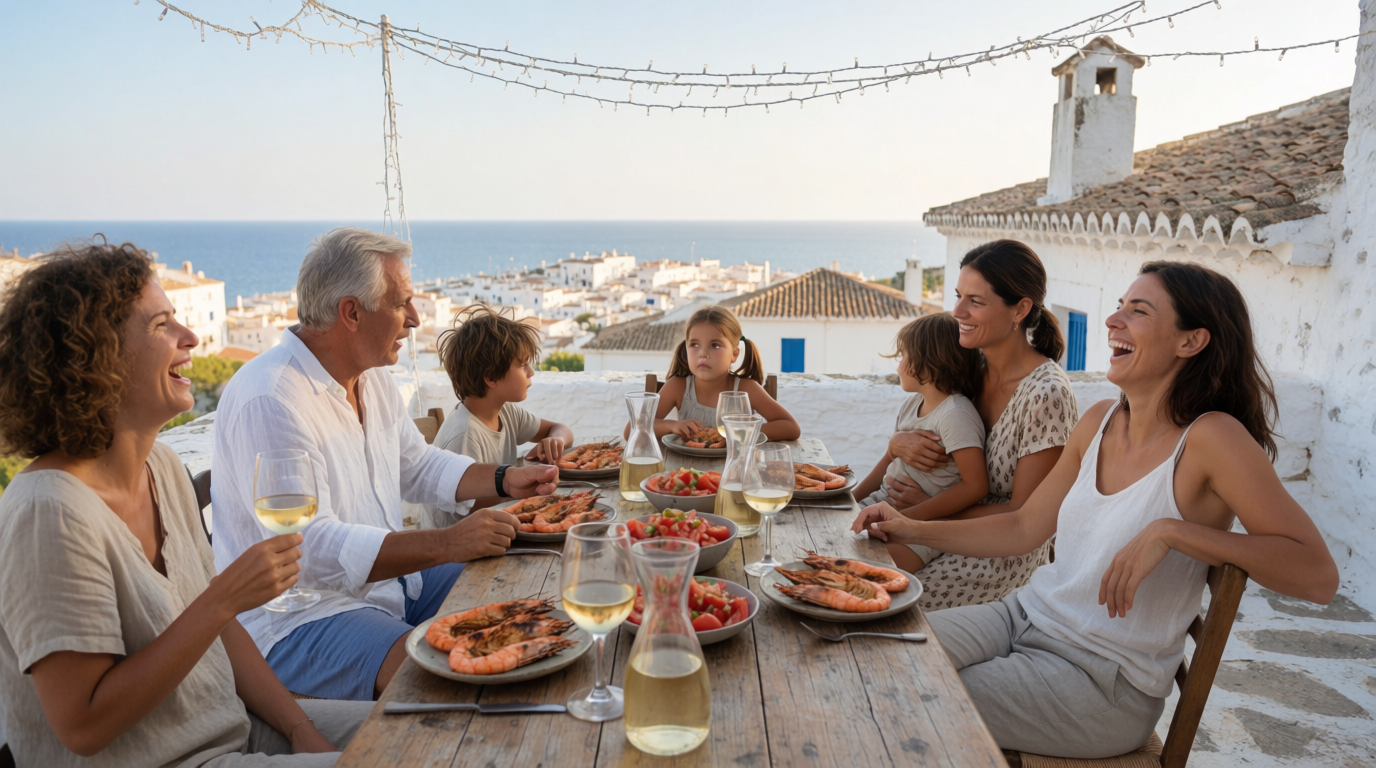
Lunch is long and sits in the middle of the day, often at home. Dinner is where August really shows itself, and ten o'clock is an ordinary time to sit down. Tables of grilled prawns, ensaladilla, tomato with good oil, fried fish and a jug of tinto de verano appear on terraces all along the coast.
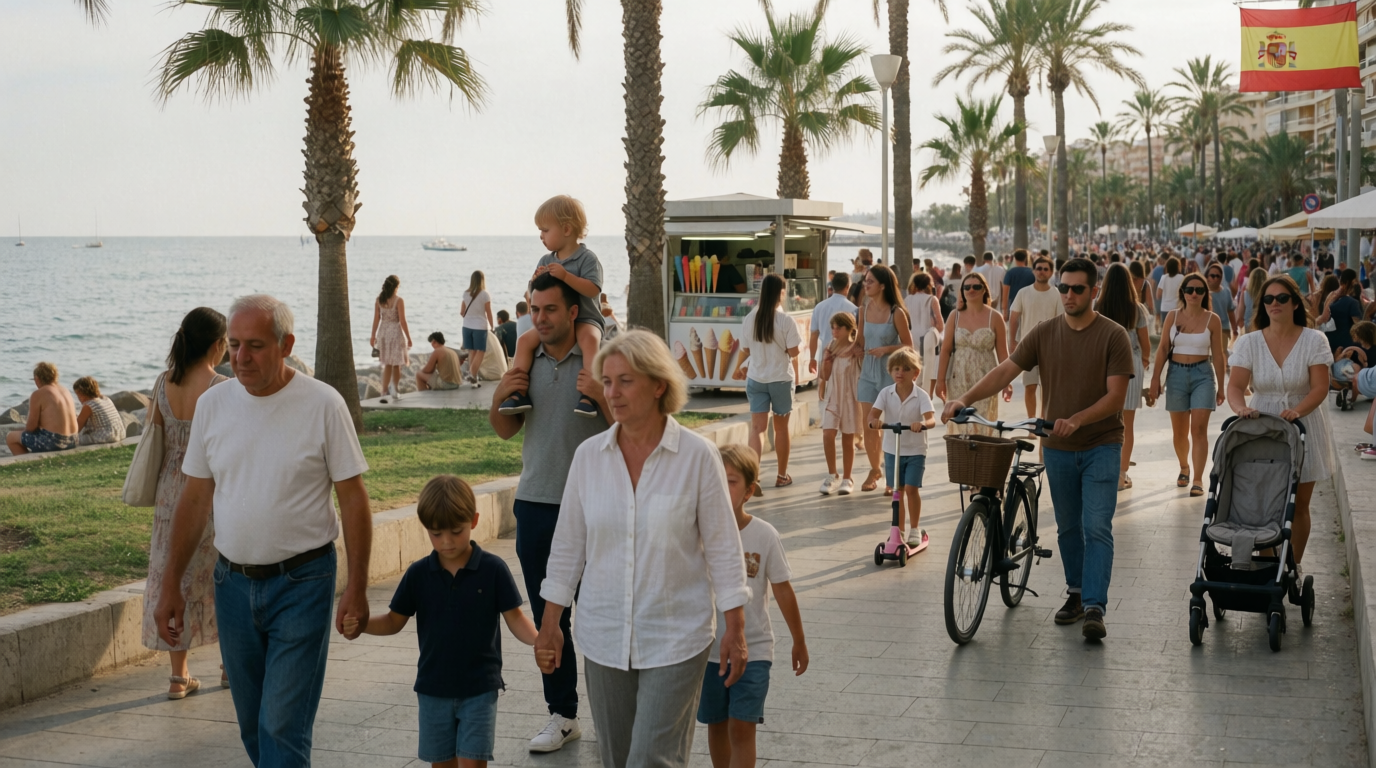
After dinner comes the paseo. Everyone walks, from babies in prams to the oldest member of the family on an arm, and the ice cream queue is part of the route. If you have ever wondered why Spanish towns are designed for strolling, August answers it.
August makes sense of the whole country's habits: eat late, walk after, and let the evening be the main event.
Feria week and the village verbena
August is also fiesta season. In Málaga, the Feria in mid-August takes over the city, with a daytime feria in the historic centre and a larger night-time ground at Cortijo de Torres. Fino, flamenco dresses, pescaíto and long, loud evenings are the point of it.
Beyond the cities, almost every village and barrio has its own celebration around the summer, with a patron saint, a procession, a verbena (an open-air dance with a band on a stage in the plaza) and music that carries on well past what a visitor expects. Dates differ from town to town, so the programme from the local ayuntamiento is the best guide to what is on and when.
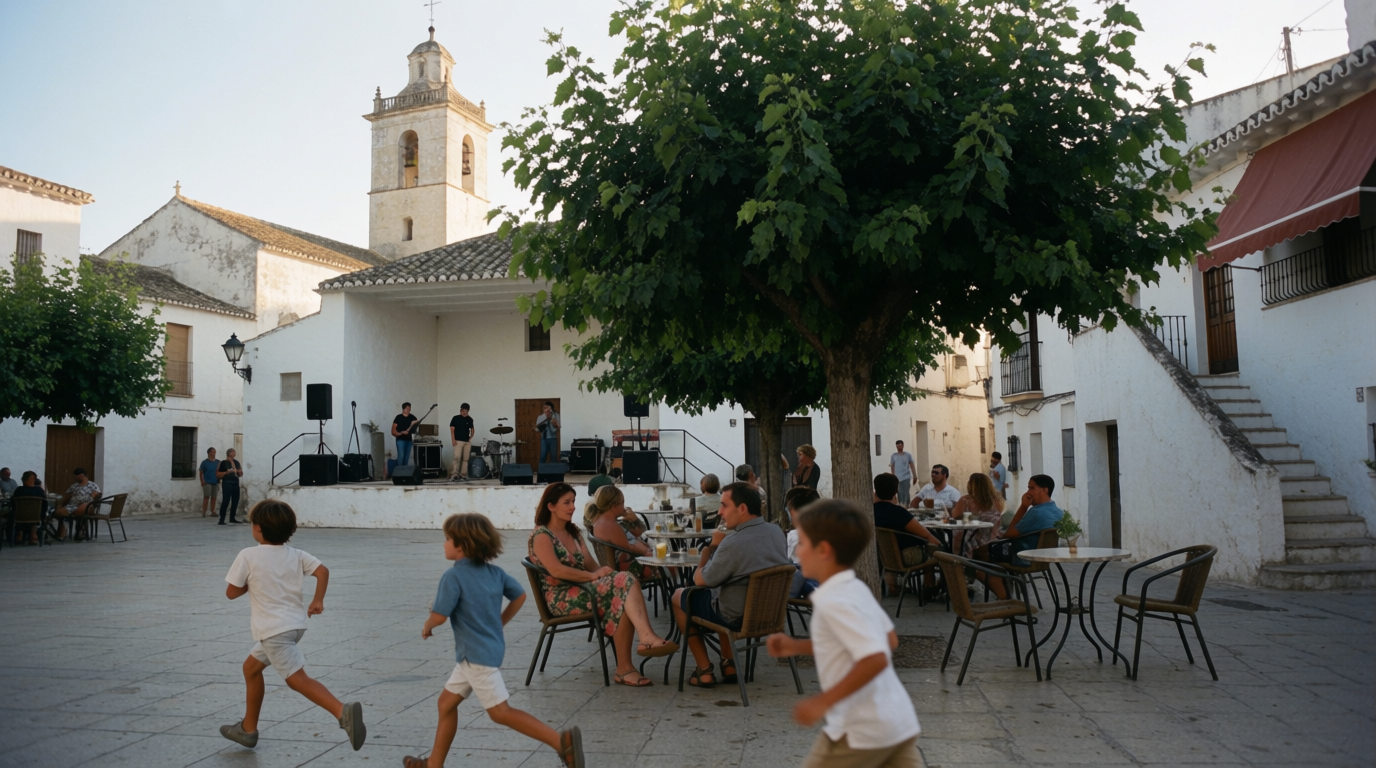
Two things are worth knowing as an owner. First, a fiesta in your street is not a disturbance to be endured, it is the town being itself, and joining in for an hour is usually the best response. Second, if you want a quiet night, a few streets away or a higher floor can make all the difference, which is a useful thing to notice before you choose a home.
What August asks of an owner
Living here in August is a different proposition from visiting. A few practical realities are worth holding in mind:
- Popular restaurants fill early in the month, so booking a table, especially for a weekend, is part of the rhythm.
- Parking near the seafront needs patience, and a short walk is often the better plan.
- Tradespeople, offices and some small shops slow down or close for part of the month, so repairs and paperwork are best planned for before or after.
- The best swim of the day is usually early, before the beach has filled.
It also changes the feel of a community. Pools are busier, terraces are fuller and the neighbours you barely saw in spring are suddenly on the balcony below. Many people find that this is when they get to know a building or an urbanización, simply because everyone is outside.
If you are weighing up where to live, it can be a useful test. A town that still feels like itself in August, with room to breathe at the edges, tends to be one that holds its character through the rest of the year too.
Why some people love it anyway
People who live on the coast year round have mixed feelings about August, and that is fair. Some leave for the cooler north, or retreat to a quieter inland village. Others settle into it, with early swims, late dinners and a long afternoon rest.
There is a generosity to the month that is hard to find elsewhere. Strangers share a table at a verbena, children from three different families run as one pack, and the sea is warm enough at midnight to swim after dinner.
If you would like to feel it for yourself before you decide anything, spend part of one August in the town you are considering, in the evening rather than the morning, and see whether you find yourself wanting to stay out.
If you would like a guide
We write about the coast so that you can picture your life there honestly, including the loud, late, crowded months. If you are weighing up a town on the Costa del Sol or the Costa Blanca, or want to be introduced to trusted local experts when the time feels right, we would be glad to hear from you.
The introduction
The local expert who knows this coast
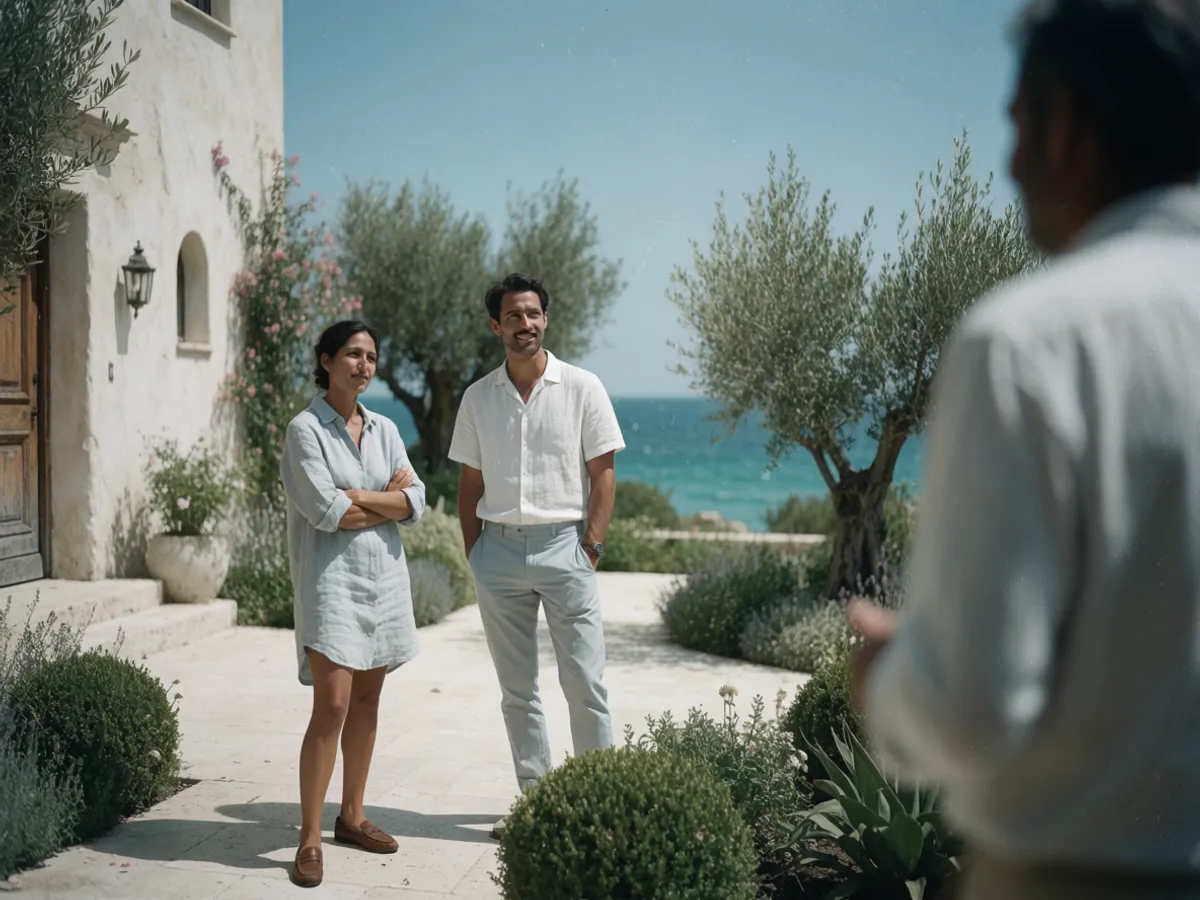
We are not the estate agency. We are the introduction. When a piece like this turns into a plan, we connect you with a vetted local expert who knows the town and speaks your language.
Find your local expert