Mijas: the hill village, the coast road, and the pull between them
By Penrose Bay EditorialPublished September 24, 20265 min read
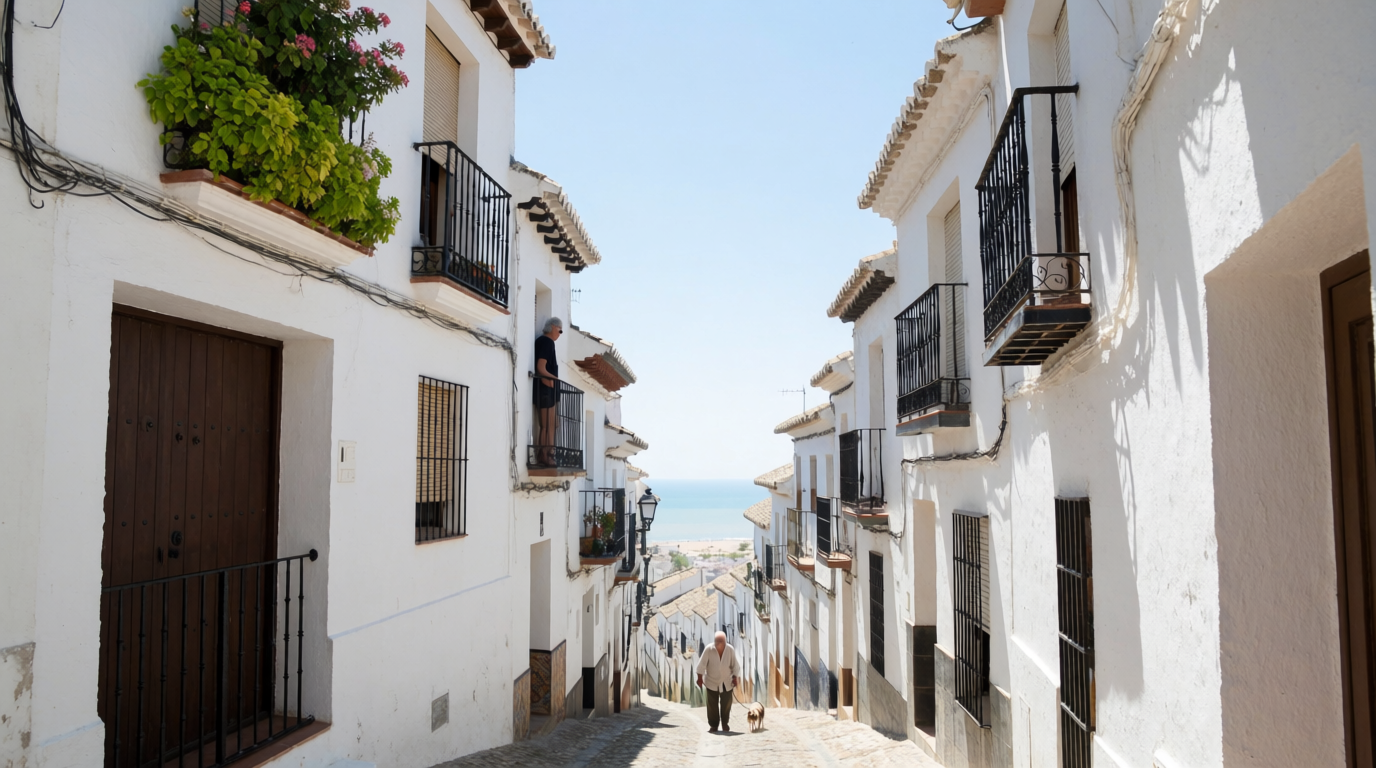
Mijas is really two places wearing one name. There is Mijas Pueblo, the whitewashed village stacked into the Sierra de Mijas, all balconies and burro-taxis and views that fall away to the sea. And there is the Mijas Costa, a long stretch of coast road, golf courses and low-rise urbanisations running down to La Cala de Mijas and the beach.
People who come to look at property here often arrive thinking they are choosing a house. What they are actually choosing is which of these two Mijas they want to wake up in, because the daily rhythm of each is genuinely different, even though the town hall address is the same.
We find it helps to be honest about that split from the first conversation, because the couple who love the pueblo's steep lanes and mountain quiet are not always the same people who want five minutes to the sand.
The village, season by season
In winter, Mijas Pueblo is quiet in a good way. The coach parties thin out, the plaza cafés fill with locals rather than day-trippers, and on a clear morning you can see the outline of Africa from some of the higher streets. The air is noticeably cooler up here than on the coast, and log fires in the older houses are not decorative.
Spring brings the almond blossom on the sierra slopes and the village's Semana Santa processions through streets barely wide enough for the pasos to pass. By early summer the day-tripper coaches are back in force, and by August the pueblo is genuinely busy from mid-morning, its narrow streets thick with visitors until the shops close for their afternoon rest.
Autumn is arguably the best stretch: warm enough for terraces, cool enough to walk the hills without wilting, and the tourist numbers easing back to something like village scale again.
The coast, season by season
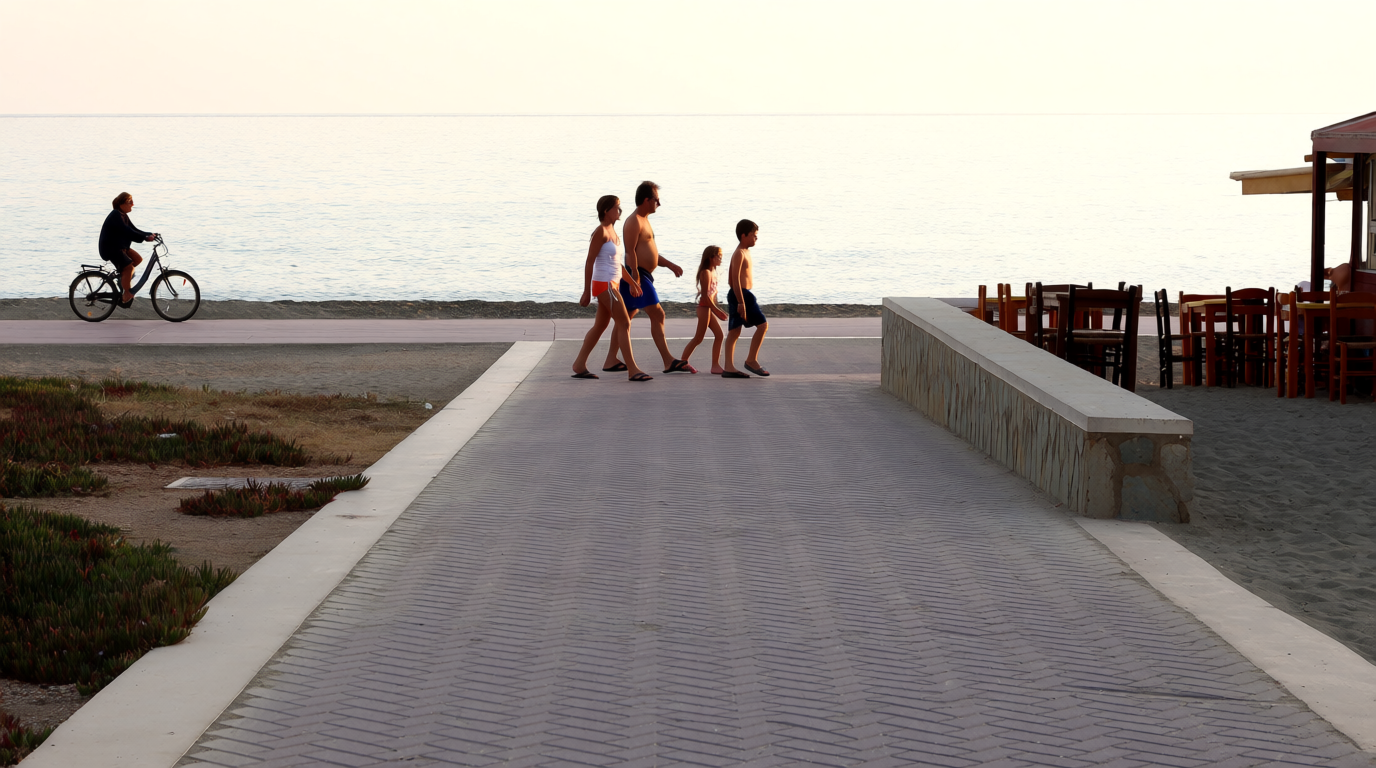
Down on the Mijas Costa, the calendar reads differently. Summer is the main event: La Cala's beach fills with families, the paseo gets its evening crowds, and the chiringuitos along the sand run long lunches of espeto and cold Alhambra beer.
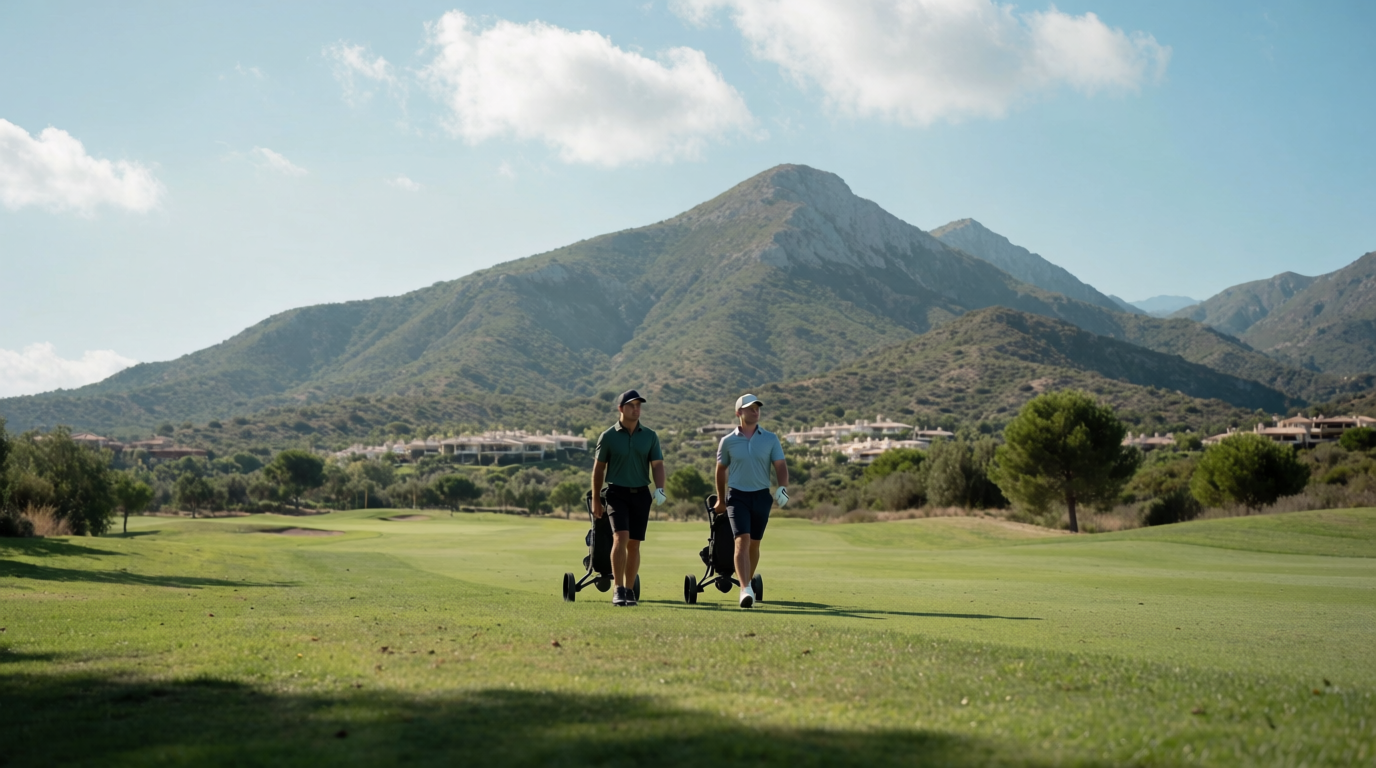
Winter here is mild rather than cold, and this is when the golfers and the year-round residents come into their own. The courses (there are several within a short drive, and Mijas has long marketed itself on the strength of them) stay playable through the winter months when courses further north in Europe are closed.
Neighbourhoods, in plain terms
Mijas Pueblo itself divides into the tourist core around the plaza and bullring, and quieter residential streets a few minutes' walk beyond, where the burro-taxis do not go and the neighbours are mostly Spanish or long-settled foreign residents. Property here tends to be older, characterful, and short on parking, which matters more than people expect.
La Cala de Mijas has grown into a proper small town in its own right, with its own beach, its own paseo, and enough independent cafés and restaurants that many residents rarely feel the need to go anywhere else. It sits roughly midway along the coast between Fuengirola and Marbella, with easy access to both.
Between the two, the urbanisations along the Mijas Costa (many built around the golf courses at La Cala Golf and Mijas Golf) offer a third option again: low-density, quiet, often gated, popular with people who want space and a garden more than village atmosphere or beach proximity.
Daily life, texture and detail
The Tuesday market in Mijas Pueblo is one of the coast's better-known mercadillos, and it still draws a proper mix of locals doing a weekly shop and visitors browsing for leather goods and olive wood. Further down, La Cala keeps its own smaller market and a steady run of beach-facing cafés where the coffee crowd gathers before the heat sets in.
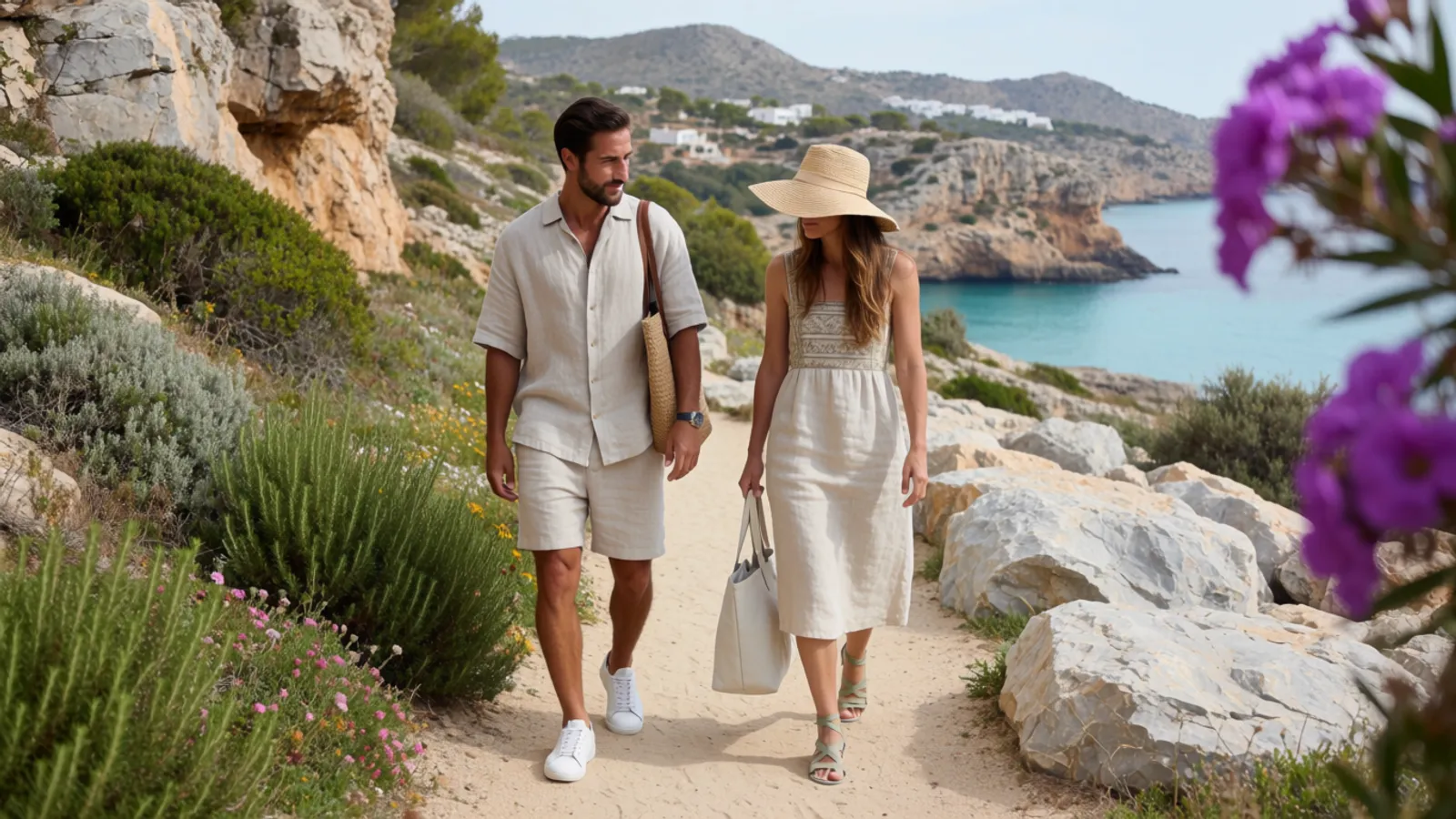
Walkers are well served here in a way some coastal towns are not. The Sierra de Mijas has genuine hiking trails rising straight from the village, and the coastal path linking La Cala eastward toward Calahonda makes for an easy evening paseo with the sea on one side.
The honest answer to "which Mijas" usually comes down to whether you want the mountain at your back or the sea at your feet, because very few properties here give you both in equal measure.
Who tends to be happiest, and who is not
Golfers and winter sun seekers gravitate naturally to the Costa side, where the courses and the mild off-season climate do the work. Families often do well in La Cala, where the beach, the schools nearby, and a genuine year-round community give children something more than a summer holiday feel. Walkers, painters and people drawn to a slower, more Spanish rhythm tend to settle in the pueblo, particularly outside the peak tourist months.
What Mijas is not is undiscovered. The pueblo's beauty has been well known for decades, and in summer it can feel more like a well-run attraction than a quiet village. Anyone who wants genuine anonymity, or a beach town without a tourist coach in sight, might be better served a little further down the coast in somewhere like Calahonda or further east toward Fuengirola, where the crowds thin without losing the sea.
The two Mijas coexist well enough, and the short drive between them (fifteen minutes or so, traffic allowing) means many residents use both: the pueblo for a Sunday lunch with a view, the coast for the rest of the week. But it is worth going in with eyes open about which one will actually be home.
If Mijas has caught your interest, in the pueblo or down on the Costa, we are always glad to talk it through and, when the time is right, put you in touch with the local people who know these streets best.
The introduction
The local expert who knows this coast
We are not the estate agency. We are the introduction. When a piece like this turns into a plan, we connect you with a vetted local expert who knows the town and speaks your language.
Find your local expert