
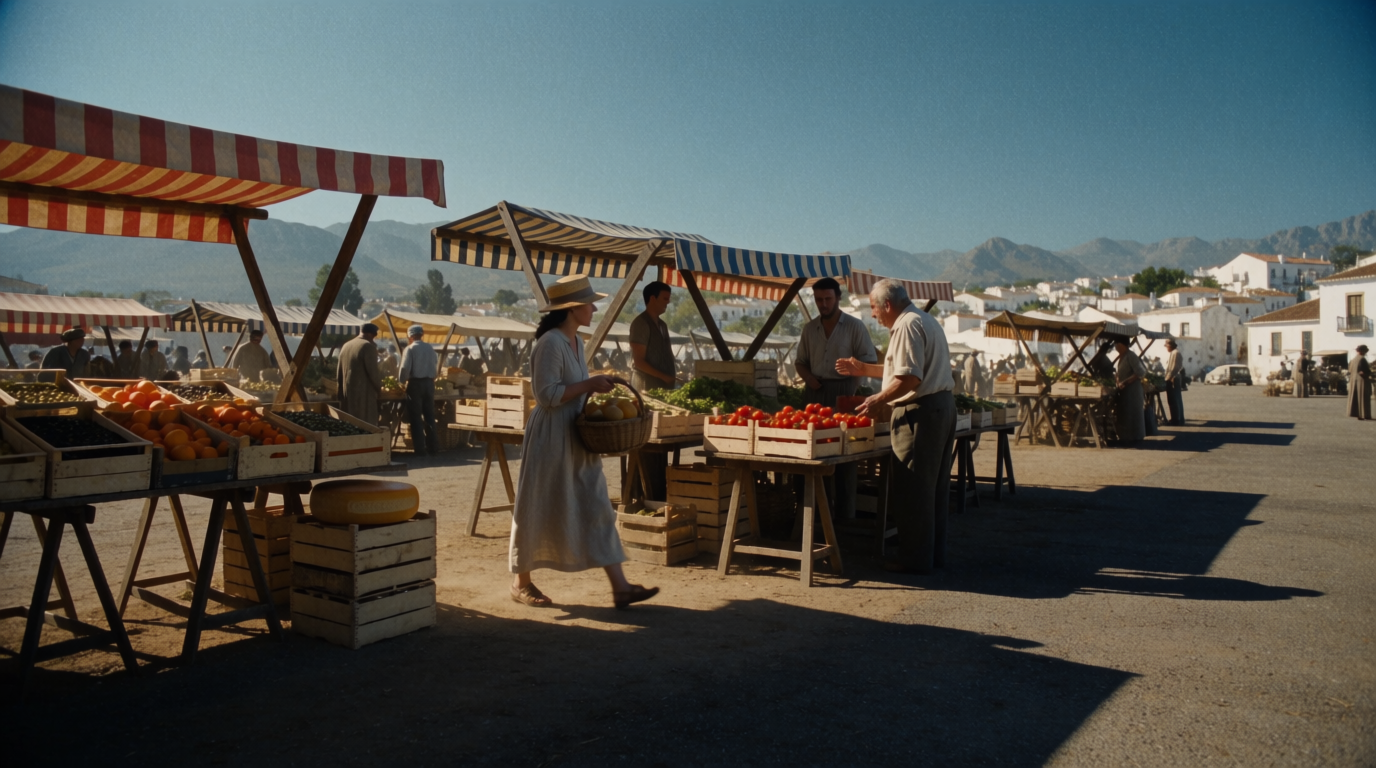
There is a day of the week, in almost every town along both coasts, when the car park behind the football ground or the dry riverbed at the edge of the pueblo fills with vans before seven in the morning. By nine it is a market: awnings up, crates stacked, the smell of frying churros drifting from a trailer near the entrance. By two it will be gone entirely, swept back into vans, the ground bare again until next week.
We call it the mercadillo, and it is one of those things that nobody explains to you when you buy a home here, yet it ends up shaping your week more than almost anything else. Ask a long-time resident what day it is without checking a calendar, and more often than not they will tell you by naming the town whose market it is.
This is not the daily indoor mercado with its fishmongers and fixed stalls, the one most guides mention. The mercadillo is itinerant. It travels a circuit, a different town each day of the week, the same vendors following the same route through Estepona on a Wednesday and Marbella on a Saturday, or through Dénia on a Monday and Jávea on a Thursday. Learn the circuit and you have, without meaning to, learnt the geography of the coast.
The week finds its shape
Most owners arrive expecting the coast's rhythm to be set by the beach, the golf calendar, or the school term. It is often the mercadillo that gets there first. You start noticing that Tuesdays feel different because that is when the market comes to your town, and Tuesday becomes the day you do not book anything before eleven.
There is a practical reason for this beyond habit. The market is often cheaper and better than the supermarket for the things that matter most: tomatoes that were picked two days ago rather than shipped from elsewhere, a chorizo made by a family who also sell it at three other markets that week, plants for the terrace at half what the garden centre charges. Residents who have been here twenty years still do their main shop this way, supermarket for the rest.
What travels with the market
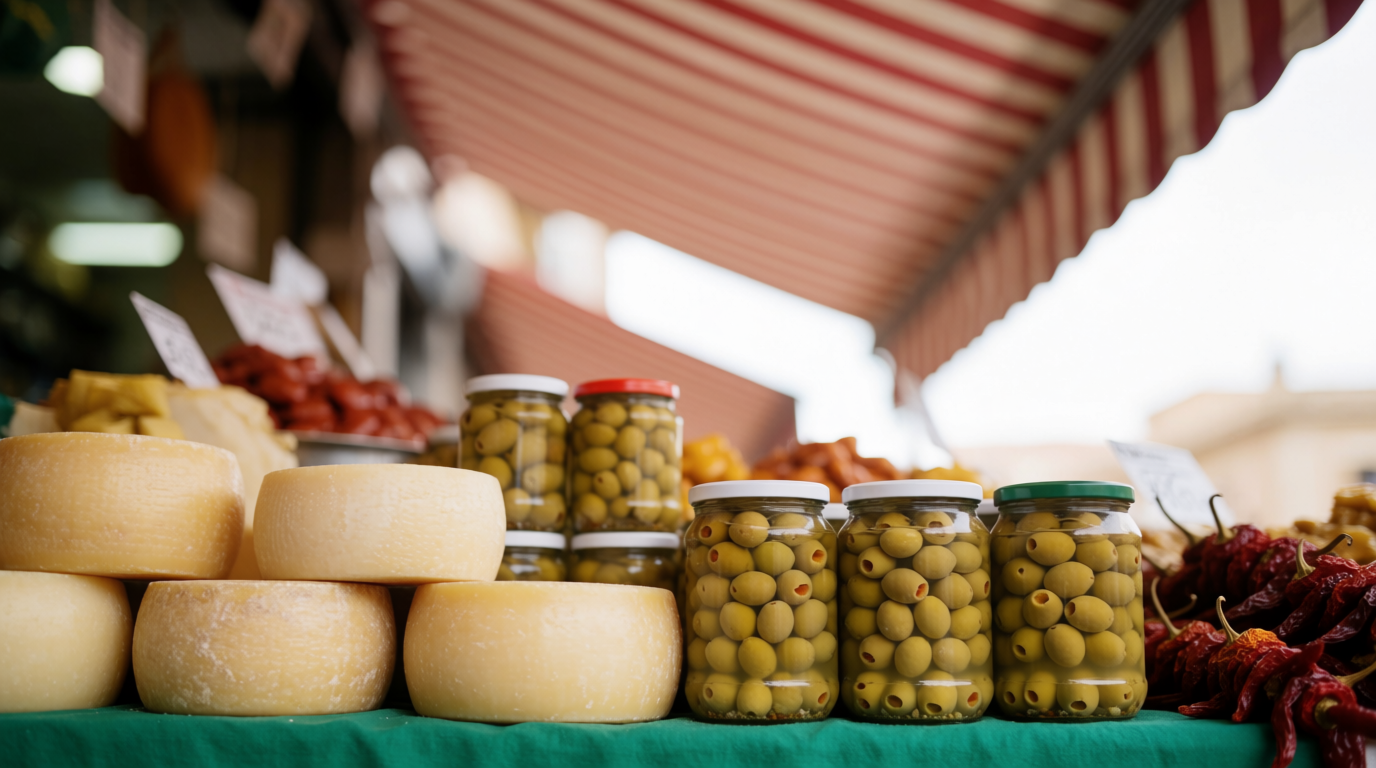
The stalls themselves are a kind of inventory of what a Spanish household actually needs, and it rarely matches what a tourist expects to find. There will be a fruit and vegetable stand with a queue, a cheese stall with wheels of Manchego at different ages, a fishmonger with ice trays if the town is coastal, and at least one van selling nothing but olives, a dozen varieties in open barrels, sold by the kilo and scooped into bags by hand.
Alongside the food, and taking up at least as much ground, are the household stalls: work trousers and school shoes, kitchen towels, garden hose fittings, phone cases, sunglasses of uncertain provenance, and always a stall or two of plants and terracotta pots that will outlast the ones from the garden centre by several summers. It is not curated. It is simply what a town needs, laid out in the open.
The mercadillo does not perform for visitors. It exists for the people who live there, which is exactly why it is worth understanding rather than photographing.
Who you see there
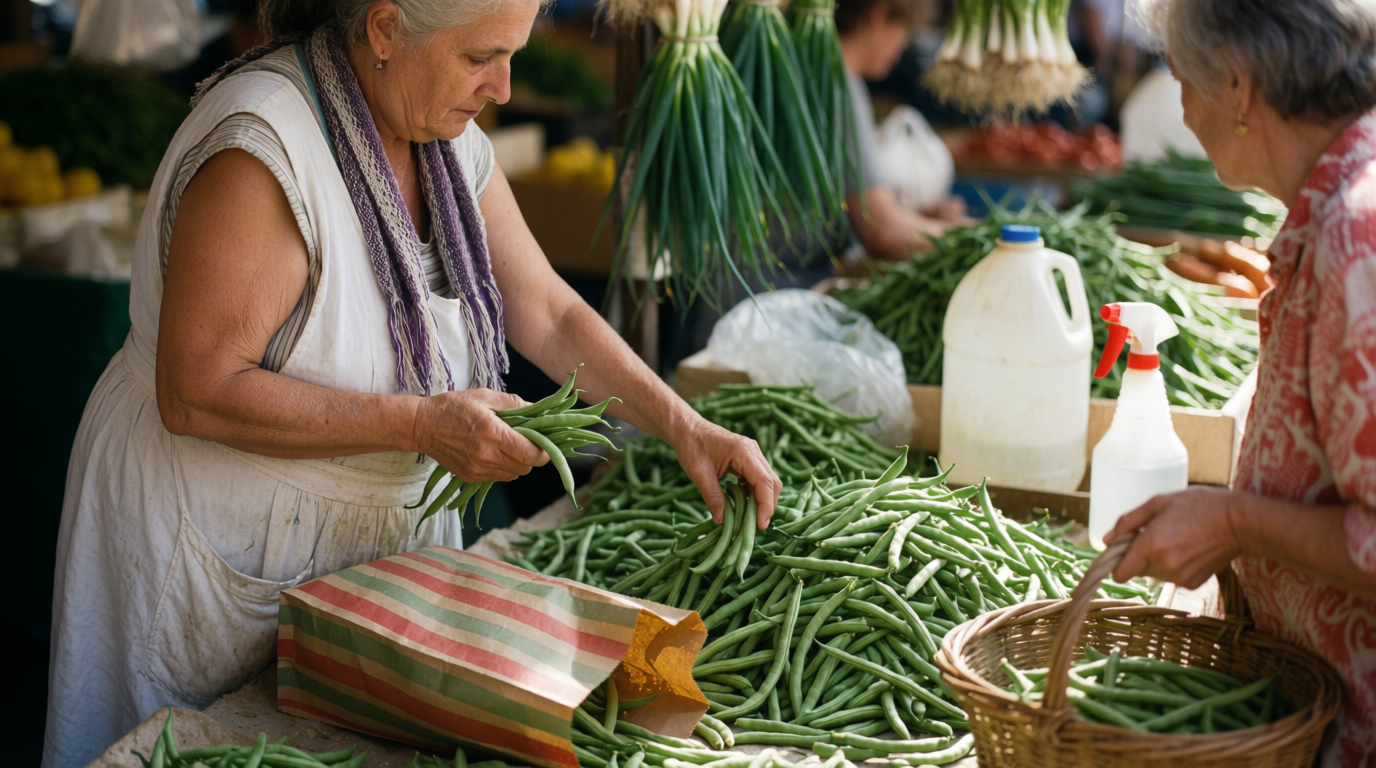
The market is also where you learn who your neighbours actually are, in a way the paseo marítimo or the beach club never quite manages. The retired couple from three doors down, the woman who runs the dry cleaner, the builder who quoted you for the terrace last spring, all of them will pass through the same three aisles on the same morning, most weeks, for years.
Stallholders remember faces before names. Buy your peaches from the same van for two months and you will find yourself getting the good ones from underneath the display, offered without being asked. This is not sentimentality, it is simply how trade has always worked in small markets, and it rewards showing up rather than shopping around.
Learning the rules, gently
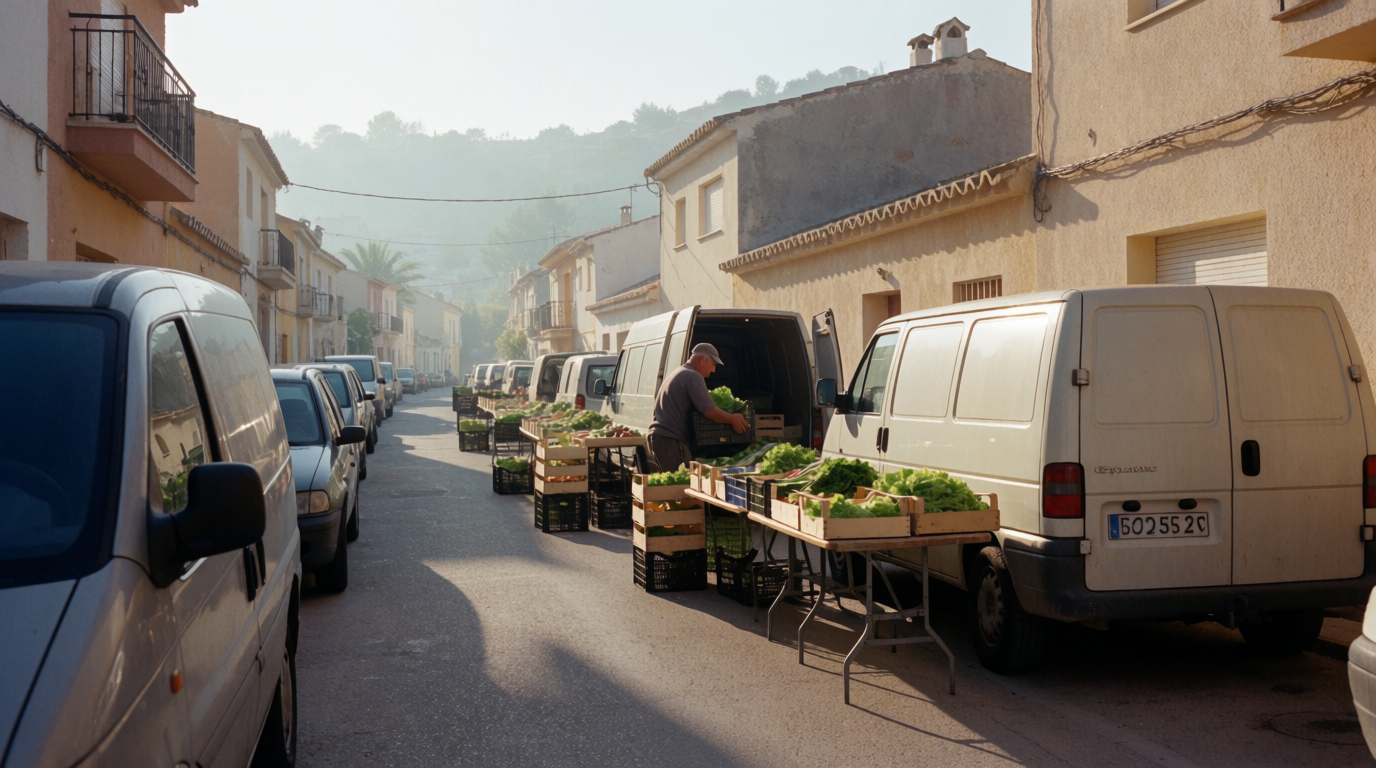
A few things make the mercadillo easier once you know them. Cash still moves faster than cards at most stalls, though this has been changing. Arrive early if you want the best produce, arrive closer to midday if you are hunting a bargain as stallholders begin discounting rather than pack unsold stock back into the van. And it genuinely is worth learning a handful of names, the seller you buy cheese from, the woman with the good plants, because it changes the market from a transaction into a relationship.
Parking is the one real inconvenience, since a mercadillo can occupy an entire municipal car park for a morning. Most towns publish the market day and location on the ayuntamiento's website, and it is worth checking before you plan around it, since routes and days do shift occasionally when a town reorganises its calendar.
We find that owners who take to the mercadillo tend to be the ones who settle fastest, because it asks nothing of you except to turn up on the right morning with a bag and some patience. If you are weighing up a home on either coast and want a sense of how a town actually spends its Tuesdays, or its Saturdays, we are always glad to talk it through, market days included.

Przedstawienie
Lokalny ekspert, który zna to wybrzeże
Nie jesteśmy agencją nieruchomości. Jesteśmy przedstawieniem. Gdy taki artykuł zamienia się w plan, łączymy Cię ze sprawdzonym lokalnym ekspertem, który zna miasto i mówi w Twoim języku.
Znajdź lokalnego eksperta